By Kevin Greer
Lakeside Communications Manager
Many musicians come from humble beginnings, and Rodney Crowell is no exception. His musical journey, however, began earlier than most.
At age 11, Crowell was playing drums in his father’s band at honky-tonks in suburban Houston. His career with that band was short-lived.
“I lasted about six months on that stool,” Crowell said. “It became obvious to my mother that this was not a good thing for me.”
In his early 20s, Crowell met singer-songwriter Guy Clark, who became one of his mentors. Crowell later married Rosanne Cash, daughter of the legendary Johnny Cash. Crowell performed alongside his father-in-law on several occasions, and the two remained close even after Crowell and Rosanne divorced.
A native Texan and multi-Grammy Award winner, Crowell has written 15 No. 1 songs and is a member of the Nashville Songwriters Hall of Fame. His songs have been recorded by artists including Emmylou Harris, Johnny Cash, Waylon Jennings and Keith Urban, and his work has helped shape the sound of modern Americana.
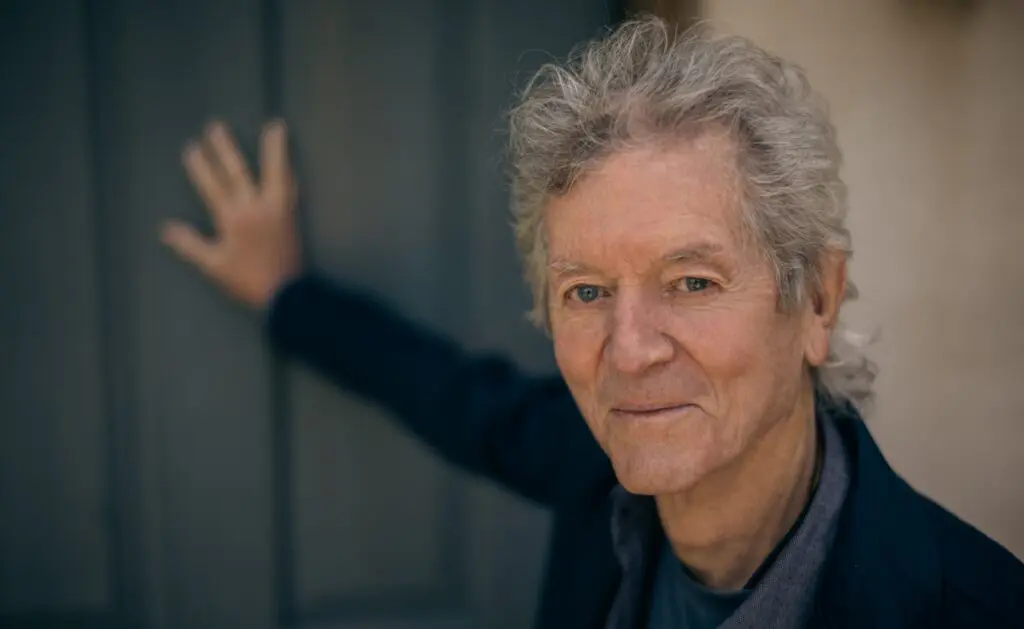
Crowell will make his Hoover Auditorium debut when he performs his hits on Friday, Aug. 21, at 7:30 p.m.
Crowell recently spoke with the Lakesider newspaper about his musical influences, songwriting mentors, relationship with Johnny Cash and what audiences can expect at his Lakeside performance.
Have you ever been to Lakeside?
Crowell: No. I’ve been to Cleveland, and I’ve been to Toledo. That sounds like the opening line to a song.
How did your family influence your love of music?
Crowell: I had a great amount of influence from my father, who was kind of a savant. He was a sharecropped farm kid during the Great Depression. He could hear a song once or twice and remember it. When I was growing up, my father was a wealth of 30s and 40s country music, and the folk side of it. I’m playing on the floor with cars and hearing him sing some real classics. If you knew my mother and father, it would be pretty obvious that if I had a shot at anything in life, it would be writing songs, because my father sang them, and my mother just made stuff up. She was a rhymer for no reason.
What was it like playing in your dad’s band?
Crowell: We played dingy honky tonks and beer joints on the east side of Houston. The beer joints were a cut below honky tonks down there. My dad was confident in his ability to hold people’s attention, even if it was only five people. He brought a pawnshop set of drums, and on Tuesday and Friday nights, I played drums in his band. It was a train wreck from the get-go. The Great Depression kept him from understanding that he could just blow us off and go to Nashville, because my father was a better singer than I was. He didn’t write any songs, but he knew thousands of them.
How did Guy Clark and Townes Van Zandt shape your approach to songwriting?
Crowell: When I was 22, Guy Clark came into my life and introduced me to the craft of songwriting and to appreciate poetry. He took me under his wing and mentored me until I got the hang of it a little bit. I wrote a couple of good songs and was on my way.
They were very intelligent and creative. It was the breadcrumbs out of the forest. The first time I heard “Pancho and Lefty,” Townes was sitting about three feet from me. He played it for me and blew my mind, which was what he wanted to do. It was like, “All right, that’s what I have to do. If I’m going to stay in this game, I have to shoot for that.” The first time I sat down with Guy Clark at his kitchen table, we listened to “L.A. Freeway,” a song he wrote. I realized I have a lot of work to do.
Here’s where my father comes into play. I knew songs Clark and Van Zandt didn’t know. They were song searchers, and I could play those songs in their presence to hold my place until I could come up with something myself. In that way, my father gave me a head start on hanging with the pros, and I was a quick study. Within six months, I wrote “Song for the Life,” which I still perform.
Is it safe to say a mistake boosted your career?
Crowell: When Jerry Reed’s manager heard me in a happy hour bar gig in Nashville, I played a song that I wasn’t supposed to play. The rules were that you don’t play any originals. I got fired for playing the song, but three seconds later, I got hired by Reed’s manager to write songs for them.
The very next day, we went to the RCA Studios. Chet Atkins walked in with my guitar and asked me, “Did you write this song we’re about to record?” I took a deep breath and said, “Yes, sir.” Atkins responded, “Well, when everybody gets here, I want you to teach them a song.”
I’m out there on my first song, and I’m teaching Buddy Harmon, Henry Strike, Hal Rugg, Pig Robbins and Reed a song, and it got recorded. I got a $100-per-week retainer to write songs, and I was on my way. That gave me the freedom of not having to worry about rent. You could say that there was a guardian angel putting me in the right place at the right time.
What did you learn from becoming part of the Johnny Cash family?
Crowell: I’m writing a book about that right now. John and June welcomed me into the family as if I were their own blood. They loved me, and they treated me with dignity. I learned so much from being around someone who was so revered, skilled and larger than life.
After Roseanne and I split, John and June heard that I had a new girlfriend. They called me up and said, “We want to meet your girlfriend. Bring her over for dinner.” More than the business, it was the human dignity and the big hearts they both had that made mine bigger.
We were on tour with John and his band, opening for them. Stuart Smith was a guitar player who worked with me and recently retired from The Eagles. We’re watching John’s band, and he leans over to me, and he says, “Body language, baby.” What he meant was Cash owned that stage with the body language he had.
I can’t say he was open to everybody, but he was open to me. They respected me because I had already joined the family and achieved some success. I was producing hit records for his daughter, so there was no reason he should shut me out.
What do you remember about the first time you performed onstage with Johnny Cash?
Crowell: I was on stage with him at Royal Albert Hall in London, and he’s performing “Will the Circle be Unbroken?” He’s singing it, maybe in the key of G, and he’s that baritone on the edge of bass. I’m a tenor, and he throws it over to me, says, “Take a verse, Rodney.” Well, in his key, there’s nothing I can do. I can’t jump the octave up, because I’ll sound like Mickey Mouse up there. I can’t get the low notes, so I just spoke them. He looked at me and laughed, because he knew exactly what he’d done and knew I was a tenor.
It was right around the low ebb of his career in a 1,500-seat theater with only 350 people in it. I felt really bad for him, but when the show was over, he and June got in a black limo and sped out of there. A few years later, Rick Rubin revitalized his career, and he ended up back on top. A valuable lesson he taught me is that you shouldn’t give up on who you are just because you’re at a low ebb.
Did the success of Diamonds and Dirt change your career and your relationship with music?
Crowell: I wasn’t cut out to be a country music star. I had all those hit records, and we were supposed to glad-hand the morning DJ. What I learned is that they had a hard job to do, and I made their job harder. That’s when I pulled a rip cord and took some time away from it, then came back more as an Americana singer-songwriter. I wanted the freedom to write exactly what I wanted to write, to sing and record without having to think, “Are they going to like this on the radio?” I’ve lived freely since that time. To stay at the top of country music, you have to meet the expectations. There are artists who are perfectly fitted for that, and I admire them, but that’s not me.
You have written songs across several genres. Do you have a favorite style of music?
Crowell: Classical music, jazz and blues. I like Ravel Pavane, Miles Davis, Hank Williams and Leonard Cohen. I don’t put it like, is this jazz or is this country? To me, is it good? Does it touch my heart? Does it move my soul? That’s how I am about it. I don’t put a label on music. I can spot phony music from 100 miles away.
What, what can Lakesiders expect at your Hoover Auditorium concert?
Crowell: We focus mainly on the last couple of albums, throwing in some of the most recognizable tunes. I’ve written 15 No. 1 songs, and on any given night, I might play three, maybe five. What I feel obliged to do is play the ones that mean the most to me right now. I don’t expect an audience to be moved if I’m not moved.