By Kevin Greer
Lakeside Communications Manager

When Tom Gouttierre graduated from college, he didn’t send out résumés or interview for office jobs.
His family owned a bakery, and by age 18, he had already become a master pastry chef. He could have stayed and eventually taken over the business, but he felt called to something different.
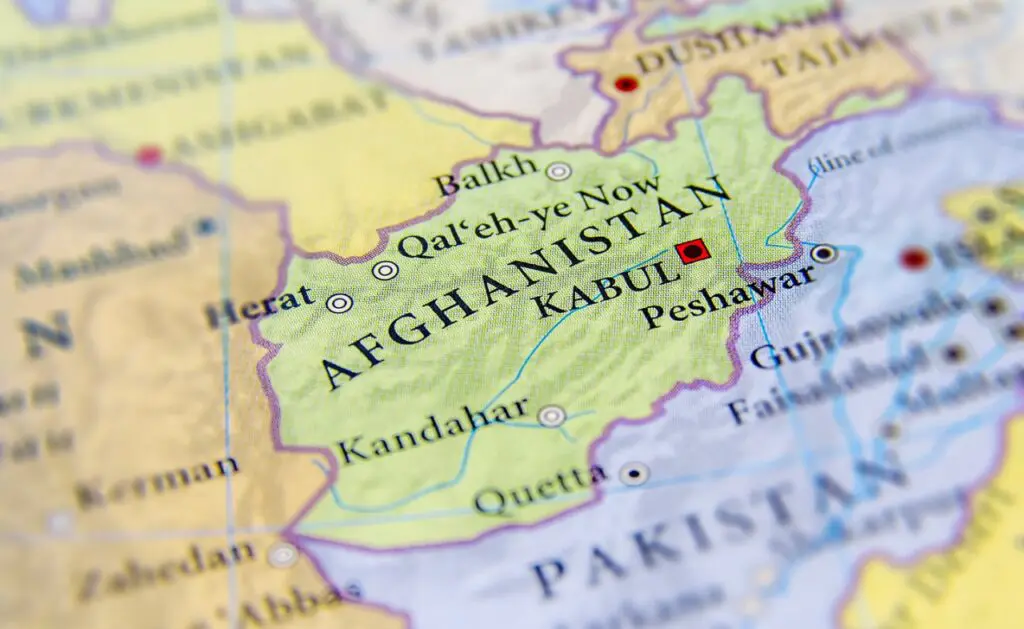
Just months after marrying his wife, Marylu, in August 1964, the couple left northwest Ohio for Afghanistan as Peace Corps volunteers. It was Tom’s first time on an airplane and his first trip outside the United States.
“In many ways, the most distinctive part of my educational experience is that my wife and I decided not to immediately take on a mortgage and a bunch of children,” Tom said. “The decision at the time was a bit gamey, but it opened up so many doors.”
Finding a Second Home
After completing their two-year Peace Corps commitment, the Gouttierres returned to the United States, where Tom earned his doctorate at Indiana University. He continued studying Persian, building on the language skills he developed while living in Afghanistan.
“It was such an eye-opener for me to gain this confidence to communicate with people in a language other than my own,” Tom said. “It remains one of the most satisfying learning experiences I’ve ever had.”
Their connection to Afghanistan never faded. Through a Fulbright Fellowship, Tom and Marylu returned to the country, where he taught, conducted research and later served as Executive Director of the Fulbright Foundation in Afghanistan.
Becoming the “Wizard of Kabul”
Basketball unexpectedly became one of Tom’s greatest connections to the Afghan people.
Although soccer was the nation’s most popular sport, basketball was gaining momentum. On his first day teaching English at Habibia High School, the basketball team’s captain asked Tom to coach.
“I was delighted because I was hoping somebody would ask me to do that,” Tom said.
The team struggled early but steadily improved, eventually defeating its longtime rival to win the league championship. Habibia continued winning under Tom’s leadership, even beating Kabul University in exhibition games.
His success led to an unexpected honor: coaching Afghanistan’s national basketball team.
One of the team’s most memorable victories came against China. Facing a much taller opponent, Tom relied on speed, conditioning and a zone pressure defense inspired by legendary UCLA coach John Wooden, also known as “The Wizard of Westwood.”
Afghanistan built a commanding halftime lead, but the Chinese team refused to continue because the Afghans were coached by an American. Tom watched the second half from the stands while his players finished the game on their own, securing Afghanistan’s first international basketball victory, 58-39.
Years later, Sports Illustrated chronicled the remarkable story in a July 22, 2013, feature titled “The Wizard of Kabul.”
Saying Goodbye
During their second stint, Afghanistan became something different from the peaceful country the Gouttierres fell in love with. A 1973 coup d’état replaced the country’s monarchy, and many of their Afghan friends feared growing Soviet influence. As political instability increased, the couple returned to the United States.
In the summer of 1974, Tom accepted a position as Dean of International Studies and Programs at the University of Nebraska-Omaha, where he served for 41 years.
“I don’t see how Afghanistan can ever be what it was,” said Tom. “It was an exceedingly hospitable country that seemed to have as its premier cultural narrative to be welcoming to guests.”
Master Negotiator
When the Soviet Union invaded Afghanistan in 1979, Tom’s decades of experience became invaluable.
The U.S. government called on him to serve as one of America’s leading specialists on Afghanistan during negotiations with the Soviet Union.
Over nearly six years, Tom traveled to the Soviet Union 45 times and helped shape discussions that ultimately led to the Soviet withdrawal in 1989.
“I learned a lot about individuals who may have been our nation’s enemies,” Tom said. “They had the same kind of concerns and feelings about their own families or their own country. They loved the people of Afghanistan.”
When the Soviets withdrew from Afghanistan in 1989, Tom felt a great deal of satisfaction, but it wasn’t about patting himself on the back.
“It enabled me to give back to the Afghans through my efforts,” he said. “In the 10 years that my wife and I lived there, we never encountered greater hospitality, warmth and friendship than we experienced from the people of Afghanistan.”
Tom later returned to Afghanistan with the United Nations Peacekeeping Mission and has served on numerous international committees focused on Afghan refugees and related issues. Today, he is widely regarded as one of the Western Hemisphere’s foremost experts on Afghanistan.
Lakeside Connection
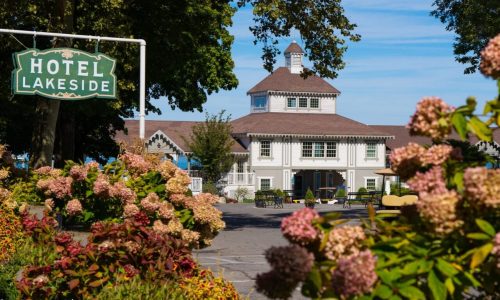
Marylu’s family owned a cottage in Lakeside, and Tom first visited while they were dating in the 1960s. Today, Lakeside remains a cherished family tradition.
The Gouttierres gather each summer in an 18-person cottage that is nearly always full. Family shuffleboard tournaments are a favorite tradition, and Tom proudly notes that he and his grandnephew are the two-time defending champions.
“Lakeside is just a wonderful place to be,” he said. “Being together is an important part of our family’s thinking and being. It’s a nice way for our children and grandchildren to meet their cousins from all sides.”
Tom will return to the Chautauqua Lecture Series during Great Lakes Week to present “American Global Soft Power: What is It? How Does It Work?” at 3:30 p.m. Tuesday, July 14, in Orchestra Hall.
“I think one of the things that makes Lakeside unique is the Chautauqua Lecture Series,” Tom said. “That’s what sets it apart from just being a vacation land.”