By Kevin Greer
Lakeside Communications Manager
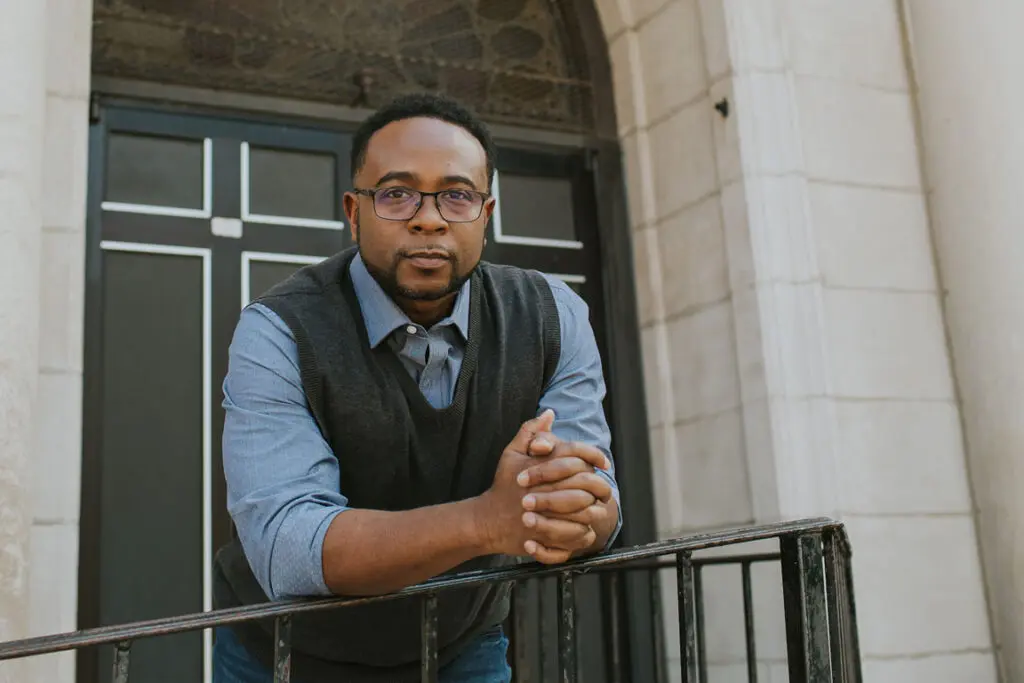
To say Dr. Jemar Tisby is well-rounded is an understatement. He earned a Master of Divinity degree and is a historian, activist, teacher and best-selling author, to name a few. He is also a well-known lecturer and will be in Lakeside as the Keynote Speaker at 8 p.m. Tuesday, July 11 in Hoover Auditorium.
Tisby’s road to faith started in high school when a friend invited him to a youth group. It was mostly white and evangelical, but he saw it as a social outlet to play sports and meet girls. However, the young pastor’s messages helped Tisby accept Christ and become a lifelong Christian.
Tisby attended the University of Notre Dame, where he earned an American studies major and a theology minor. As a student, he continued to go to Sunday church services, most times as the only Black person attending. He also volunteered with the Center for Social Concerns, spending summers working at youth day camps in an inner-city neighborhood in Chicago, where he was exposed to the effects of poverty for the first time.
After graduating from Notre Dame, he became a corps member with Teach for America in a very poor area on the Arkansas side of the Mississippi Delta. He found it very difficult to see his students deal with the injustices they faced every day.
Tisby became a student again when he enrolled in the Reformed Theological Seminary in Jackson, Mississippi, and earned a Master of Divinity degree. There he began to let his voice be heard and began writing and speaking about race and religion. He started the Reformed African American Network and the African American Leadership Initiative. He received a lot of support and found that many people wanted to address racism in the church. He had a goal of making space for Blacks in white churches as he had in high school.
After Michael Brown was killed by a police officer in Ferguson, Missouri, Tisby wanted to know more about the history of race in the United States. So, he enrolled in his first graduate history course at Jackson State University which led him to pursue his PhD in history at the University of Mississippi.
Tisby went on to write adult and youth versions of his best-selling book, How to Fight Racism. He also wrote The Color of Compromise and is currently working on The Spirit of Justice: Stories of Race, Faith and Resistance, which will be released in the summer of 2024. Tisby took a break from writing to have an engaging conversation with The Lakesider about all his work at the intersection of race, history and religion, his college experience and how he’s looking forward to his first trip to Lakeside.
Have you ever been to Lakeside before?
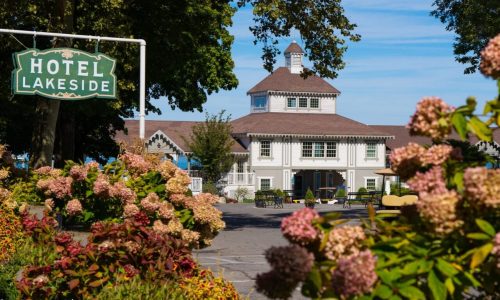
Tisby: I’ve never been and I’m super excited. Spending an extra day or two there doesn’t sound bad to me.
What looks appealing about Lakeside?
Tisby: I love the historicity of it. It’s been around along time, stayed faithful to a mission and I love the outdoors. To blend the kind of rich intellectual offerings that they provide with a gorgeous setting, I think is healthy in all kinds of ways.
Other than lectures, what else are you doing these days?
Tisby: Mostly writing, I’m working on my next book, The Spirit of Justice: Stories of Race, Faith and Resistance, and it helps us answer the question: How do we keep going when it feels like we’re not winning in this fight against racism? It’s a historical survey looking at people of faith who resisted racism instead of being complicit with it. I also do a lot of writing at jemartisby.substack.com, and I had some articles in CNN and the Louisville Courier Journal around gun violence and approaches to how we should think about that. I’m also a professor of history at Simmons College of Kentucky and, this past semester, I taught African American history and really enjoyed the students. We relocated to Louisville in January so I could teach.
What are you going to talk about in your keynote?
Tisby: Racial justice broadly, but the more I do this work, the real call is a call to courage. I want to encourage people to take the necessary steps, even just the very next step on the journey toward racial justice. The way I view my role is primarily as a cheerleader to just encourage people and give them the confidence that they have what it takes to be part of the solution when it comes to racism.
How did your life change when you joined the youth group?
Tisby: Joining that youth group came at a time in high school when I was searching for community, so it gave me my first taste of what real community can look and feel like. The only drawback was, to the extent I ever felt excluded, it was because of race. Not because anyone did anything overtly racist. It’s not what they said, it’s what they didn’t say, and it’s not what they did, it’s what they didn’t do. Race wasn’t a priority. That part of myself felt invisible and therefore unimportant. It also got me into not just community with other people, it got me into community with God and altered the trajectory of my life, to want to serve God in everything I did, even from my teenage years. I’m very thankful for encountering the people and the faith that I did in high school.
When you were there, did you feel out of place, did they make you feel welcomed or a little bit of both?
Tisby: It was definitely a little bit of both. They did a phenomenal job of evangelizing. I had a classic conversion story of friendship evangelism. The youth group leader did a great job of helping high schoolers, who can be quite cliquish, to open up to different kinds of people, and I was one of them. To the extent I ever did feel excluded or misunderstood, it was because I was one of the very few if not the only Black person in the fellowship many times. In that sense, I felt a bit isolated. I felt that there were aspects of my personality and experience that I couldn’t fully bring into that community, because other people, it didn’t seem like, would understand.
In college, why did you continue attending white churches?
Tisby: What I really appreciated about Notre Dame is that it was a place where they permeated the campus and the culture. You didn’t have to be part of a religious group. It was crucifixes in the classroom, prayers before class and chapels in the dorm. It was just part of the regular rhythm that I felt effectively incorporated spirituality and education. I’m very grateful for that. But it was also 85% white undergraduates, and this is also the season in my life where I discovered something called Reformed theology, which is even whiter evangelicalism. The first Reformed church I went to was a Dutch Reformed Church. I was the only Black person there, so it was this blend of getting this theological, spiritual influence and at the same time, becoming increasingly aware that this was not the church of Revelation 5:9 and 7:9, where people of every tribe, and tongue and nation are gathering and there was some sort of a disconnect.
Were you invited to the church or just show up?
Tisby: It’s so funny. I’m dating myself here, but I looked in the phonebook and opened to the Yellow Pages to the churches section. I looked for any church that had the word “Reformed” in the name and there was only one, so that’s where I went.
What happened when you walked in?
Tisby: It was one of those real polite church kind of welcomes like, “Oh, we’re so glad you’re here.” The sub-text is, “What on earth are you doing here?”
Do you think more people should do what you did, be the only Black person in a white church or the only white person a Black church?
Tisby: It’s a different dynamic for different groups. Black people have plenty of experience being one of a few. I think especially when it comes to church life, Black people shouldn’t feel an obligation to insert themselves into a place where they are once again a minority. That’s because we need certain refreshing places of affirmation. We don’t always get that in white churches. I think for white people, it would be healthy to experience what it’s like not to be in the majority, especially in a faith community. Different people groups ask different questions of the Bible, God, find different applications and don’t center white people and white concerns the way they’re often used to. I think it helps us understand God in a more robust and holistic way.
After graduating from Notre Dame, you took a few different paths.
Tisby: I stayed on campus at Notre Dame for one more year. I was an intern in their campus ministry department. To my knowledge, I was the first Black intern and the first Protestant intern they hired. Then I joined Teach for America and it was supposed to be a two-year commitment and I ended up spending 20 years in the Deep South. I started out as a sixth-grade teacher and taught for four years. Then I became the middle school principal there for grades five-eight for another three years
What kind of experience was that?
Tisby: I taught in Phillips County, Arkansas, which was listed as the fourth poorest county in the country. It’s cotton country. We were right along the Mississippi River and in the summertime and late fall, you see the cotton blooming, which is a haunting sight. On one level, it’s beautiful. On the other level, you know the history behind those fields. In the Delta, the past doesn’t seem so long ago. It was the site of Civil War battles, civil rights marches and race-based chattel slavery. The legacy of slavery is still visible. The population of the Delta is still majority Black and is concentrated in generational poverty. The poverty rate in my town was more than double the state poverty rate, and over 40% of the people lived at or below the poverty line, which is devastating. It affected everything from healthcare, to education, to job prospects. It was very revealing, and it was in this season of my life that I really began discerning the connection between faith and justice. That set me on a path that if you put me on a trajectory to where I am today.
Talk about getting a history degree.
Tisby: I was on the path to becoming an ordained pastor in the Presbyterian Church in America. When, through a series of unfortunate events, I came to the conclusion that this would not be a denomination that was open to making bold moves for racial justice. I experienced quite a bit of backlash for trying to speak up for racial justice. After I earned my degree, I was trying to figure out a new path and my wife planted the seed for me a couple of years prior to continue my education and get a PhD. I had no idea what field I wanted or what school but ended up enrolling at the University of Mississippi and earning a PhD in U.S. history since 1877.
How are religion, race and history connected?
Tisby: It’s my passion now to think about those connections. History is important because it tells us how we got here. It gives us the context for action in the present. For instance, as we look at something like anti-Black police brutality, policing really transforms after the Civil War and emancipation. With the church, it’s a truism that 11 a.m. on Sunday is the most segregated hour in America. That didn’t happen spontaneously or in a vacuum. There’s a long history that race and religion have been mutually constitutive and that religious ideas around race and racial ideas around religion have developed in the United States, such that white people historically, have accommodated things like slavery and segregation, rather than broadly as a group confronting it. One of the things I say in my first book, The Color of Compromise, is there would be no Black church without racism in the white church, which is to say it wasn’t primarily doctrinal or theological disputes that caused Black people to want to form their own fellowships. It was the simple fact that Black people did not want to be treated like second-class citizens in the household of God. The only way we could fully embrace our dignity and our full humanity was by creating our own faith spaces. All that history helps inform not only how we got to where we are, but what we might do to improve the status quo.
How can racism be improved?
Tisby: Firstly, we all need to decide for ourselves that we want to be part of the solution. If you look historically at social movements against racism, the people were never in the majority, but the committed few made big strides. We need to make up our minds and hearts to be part of that committed few, which is really making up our minds and hearts to follow Jesus, because to follow Jesus is to follow the path of justice. Secondly, I use in my second book, How to Fight Racism, a framework I call the “ARC of Racial Justice,” an acronym that stands for “awareness, relationships and commitment.” If you want to improve race relations today, it consists of a list of tasks. Awareness is all the things we need to do to build our knowledge about race and racism and white supremacy. It’s watching documentaries, attending my talk at Lakeside and reading the books. Relationships also include partnerships, solidarity and coalition-building for maximum effectiveness. We can’t just have big heads or big hearts, we must have strong hands, and that’s where commitment comes in. Commitment is not simply staying the course, it’s committing to the systemic, institutional and policy changes that make a broad impact. One of the biggest misunderstandings about racism is when people think it’s primarily an interpersonal issue of attitudes. One person not liking someone else because of the color of their skin is sort of the lowest level of racism in terms of its harm. The most harmful impacts of racism come when they’re baked into our practices, whether church, workplace, politics or government.
Is there anything you would like to add?
Tisby: I think this event will be of interest to anyone who ever wanted to understand race more deeply, and who wants to be part of the solution to see more racial justice. It will be informative, fun, and I pray it will also be transformative.